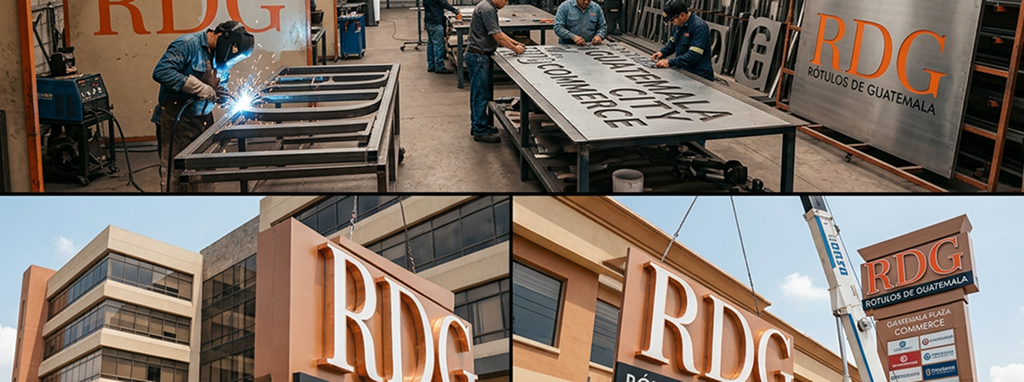
How RDG reduced project-management time by 30% with a custom Odoo ERP workflow
How we identified key information handoff events, repeated processes between departments and created a seamless system to manage clients, quotations, manufacturing projects and finance using ODOO.
COMPLETION YEAR
2025
TIMEFRAME
5 Weeks
CLIENT
RDG
SECTOR
Signage Manufacturing
The Challenge: Giving the team clear visibility into every project’s status
RDG was managing its work across several tools that were being strung together by the team. Each tool solved part of the problem, but the information was not truly synchronized across departments. That created friction at every handoff.
Because every department had its own version of the work, RDG could not easily measure the impact of its internal initiatives. It was difficult to understand where time was being lost, where profitability was being affected, or where a handoff needed to be improved. The founder also had to stay close to many small details across the entire project lifecycle. Not because the team could not do the work, but because the system did not give each team a reliable way to check, update, and validate its own responsibilities.
30%
Reduced time to manage team and projects
5.6
less hours per week on management time
RDG is a signage manufacturing company that works on both outdoor signage projects and internal signage systems for large companies and buildings. Their work sits in a demanding operational space. Some projects require semi-industrial production of repeatable pieces. Others require fully custom, one-of-a-kind signage designed for a specific space, client, or installation condition.
That mix creates a difficult challenge: The company needs flexibility in production, but consistency across the full project lifecycle. For RDG, that lifecycle runs from sales and quotation, through design, purchasing, manufacturing, installation, client delivery, and final invoicing.
Before
Managers had to check multiple tools, ask departments for updates, and manually connect information between sales, production, purchasing, installation, and finance.
After
RDG had one connected Odoo workflow where project information moved from quotation to manufacturing, purchasing, installation, and invoicing with clearer ownership at each step.
WATCH THE STORY
Building for Connected Team
A dive into how we identified bottlenecks, core flows and how we build custom solutions that bring operations and management together.
RDG chose to build on top of Odoo’s existing ERP foundation because it gave them the best of both worlds: a solid, proven system for managing core business operations, and the flexibility to shape custom tools around the way each team actually works.
THE SOLUTION
Our Approach
The goal was not to force RDG into a generic ERP workflow. The goal was to configure and customize Odoo around the way RDG already worked, while adding the structure needed to make the process measurable, repeatable, and easier to supervise. That meant staying close to the company's existing rhythm.
RDG had been operating for years, and the team already had in-house processes that were familiar to each department. A successful implementation needed to respect that knowledge instead of replacing it with a rigid system. At the same time, RDG needed more standardization between departments.
The solution was to connect the full project lifecycle inside Odoo, while customizing the key modules and flows that needed to reflect RDG's internal logic.
We kept the interface practical and role-specific, so sales, production, purchasing, finance, and installation teams could each work inside a flow that matched their daily responsibilities.
- Team Centered
- Easy to use and adopt
- Keep existing workflows
- enhance rather than replace
Screenshots of custom modules built for RDG
What We Built
How We Approached the Project
We customized several Odoo modules across the operational flow, including sales, manufacturing, projects, purchasing, finance-related workflows, and installation tracking.
Sales & quotations
Custom fields and quotation logic so the team could price projects according to RDG’s real internal process.
Manufacturing flow
Adapted Odoo to support both repeatable signage components and custom one-off projects.
Purchasing & cost visibility
Connected purchase orders, inventory needs, and project cost tracking so management could see what each project required.
Installation tracking
Built field tools so installers could report final status, document issues, and help supervisors close projects with more confidence.
Implementation Process
The implementation was phased deliberately. The project was not divided into phases because the system had to be built department by department in isolation. It was phased because each part of the workflow needed to be introduced, trained, tested, and measured with the team.
We started with the sales process. That gave RDG a stronger foundation for quotations, pricing logic, currency handling, and early project information. Then we moved into the manufacturing and installation steps, connecting the approved project information to the teams responsible for production and final delivery.
Finally, we worked with the purchasing and finance teams to improve purchase tracking, project cost visibility, and the operational data needed to understand profitability. This phased approach made the implementation easier to adopt. It allowed RDG to absorb the changes one section at a time, while still moving toward a connected end-to-end operating system.
The Result
The biggest improvement was visibility.
RDG's teams gained a more connected workflow across sales, design, operations, purchasing, manufacturing, installation, and supervision. Instead of relying on disconnected tools and repeated manual updates, each department could work inside a shared system that carried project information forward. That reduced the amount of time spent keeping separate systems aligned.
It also gave management more room to focus on operations instead of constantly chasing updates across departments. For the founder and supervisors, the system created a clearer way to monitor work without needing to personally track every small detail.
For the teams, it created cleaner handoffs and more standardized steps.
For field installers, it created a practical way to document work, report issues, collect client confirmation, and close the loop on the final installation.
build for team adoption
What we Learned
One of the most important lessons from the project was the value of having a clear picture of the intended outcome from the beginning.
RDG was clear about the ideal scenarios they wanted to reach with the right implementation partner. That clarity made it easier to align on scope, priorities, expected friction points, and the practical steps needed to move the team from the old way of working into a more connected system.
We also learned how much the order of implementation matters.
Rolling out an ERP system is not only about which features are built. It is also about when each department is introduced to the new workflow, what foundation is already in place when they join, and how confident the team feels when their daily process begins to change.
Finally, the project reinforced the importance of identifying key players inside each department.
Every implementation needs people who are willing to explore the new system early, test how it fits the real workflow, give direct feedback, and help the rest of the team understand what is possible.
START A PROJECT
Let's build something that matters.
We partner with ambitious organizations to solve complex problems through strategic design and world-class engineering.
RELATED WORK
Explore More Projects
.png)
Branding
aora: Building a brand that feels lighter than a bank
A strategic branding case study for Aora, a credit card startup making financial products easier to set up, manage, and...
Maintenance services
TRB Group Case Study: Automation for Service Business
How we helped TRB Group Streamline Quotation, Approval, and Field Operations Workflows by creating custom modules in Odo...